
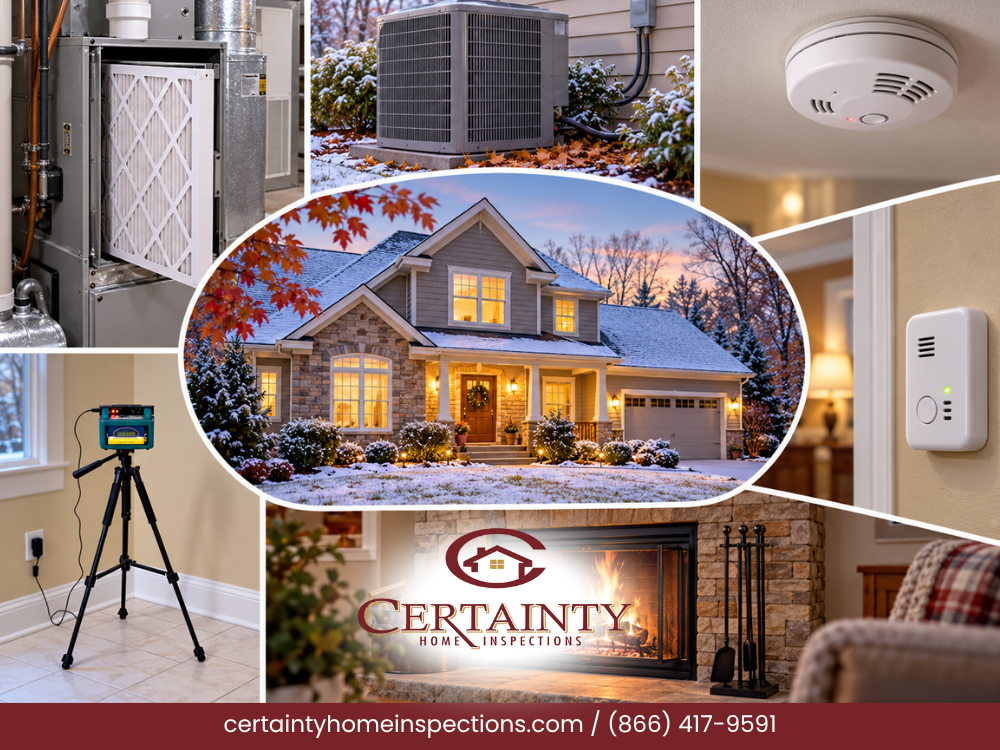
 Somewhere in November, it happens in almost every house around Salem, Jeffersonville, and the greater Louisville area. The first genuinely cold night arrives, someone nudges the thermostat up, and a heating system that has been sitting idle since spring is asked to work all at once.
Most of the time it does. Sometimes it doesn’t — and it tends to fail on the coldest night of the week, or the day before a house full of holiday guests.
Last month’s post covered the outside of the house: the roof and freeze checks, the gutters, and the crawl space. This month is about the inside, and about the systems that keep your family warm and safe once the windows close for the season. Here’s what to look at before the cold sets in.
Why Does The First Cold Snap Reveal So Many Heating Problems?
Because a furnace or heat pump that sat unused for months gets no warning before it’s asked to run for hours.
Dust settles on burners and heat exchangers over the summer. Filters that were fine in April are loaded by November. Igniters, flame sensors, and blower motors that were borderline last winter are one season older.
A faint burning-dust smell the first time the heat kicks on is common and usually fades quickly. A smell that lingers, a burner that won’t stay lit, short cycling, or new banging and rattling are all reasons to call a qualified HVAC contractor — before the week the whole region is calling them too.
What Should You Check On Your Furnace Or Heat Pump Before Winter?
Start with the simple things you can do yourself, then leave the inside of the equipment to a professional.
- Change the filter. It’s the simplest thing you can do for your system, and a clogged filter makes everything work harder.
- Clear the area around the furnace. Storage boxes, paint cans, and holiday decorations don’t belong against the unit or its vent connector.
- Look at the vent connector. On a gas furnace or water heater, the metal pipe carrying exhaust to the chimney or vent should be connected, supported, and free of rust-through or gaps.
- Check the outdoor heat pump unit. Clear away leaves and debris, and make sure it sits level with open space around it.
- Walk the registers. Open supply vents and make sure furniture and rugs aren’t blocking returns.
- Schedule a service visit if the system hasn’t been looked at in the past year. A cleaning and safety check is routine work in November; an emergency repair in January is not.
Are Your Carbon Monoxide And Smoke Alarms Ready For Holiday Gatherings?
Test them now, before the house fills up.
Carbon monoxide is colorless and odorless, and any fuel-burning appliance — a gas furnace, water heater, range, fireplace, or an attached garage — can be a source. A working CO alarm is the only practical way to know it’s there.
- Press the test button on every smoke and CO alarm, and replace batteries where needed.
- Check the date on each alarm. Detectors don’t last forever, and the manufacturer’s replacement date is usually printed on the back.
- Make sure there’s CO protection near sleeping areas, following the alarm manufacturer’s placement instructions.
- Never use an oven, range, or outdoor grill to heat the house, and never run a generator in a garage, basement, or near a window.
With extra cooking, extra people, and the fireplace in use, the holidays are exactly when these small checks earn their keep.
 Is Your Fireplace Or Wood Stove Safe To Use This Season?
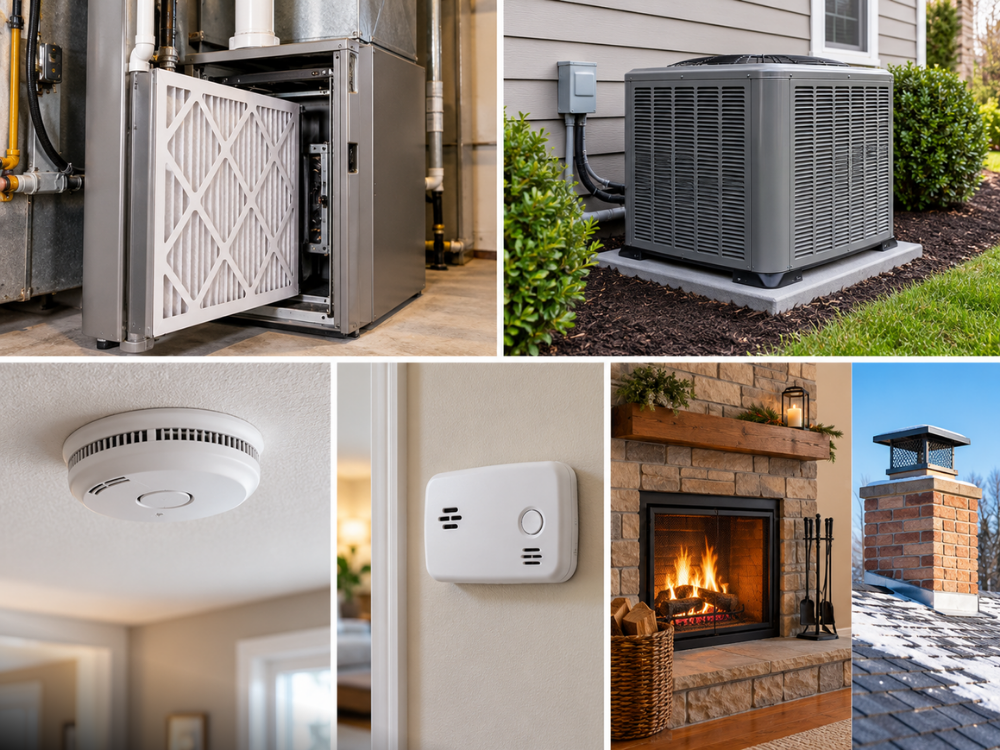 Is Your Fireplace Or Wood Stove Safe To Use This Season?
Not until someone has looked up the flue.
Chimney safety organizations recommend having chimneys, fireplaces, and vents inspected once a year. Creosote builds up with use, birds and animals nest in uncapped flues over the summer, and mortar joints crack in southern Indiana’s freeze-thaw winters.
Before your first fire, make sure the damper opens and closes fully, the chimney cap is in place, and there are no cracks in the firebox. And when you clean out the ashes, put them in a metal container with a lid and set it outside, well away from the house. Ashes can hold heat for days.
Are Space Heaters Safe In A Southern Indiana Winter?
They can be, if you treat them with respect.
Keep space heaters at least three feet from anything that can burn — bedding, curtains, furniture, wrapping paper. Plug them directly into a wall outlet, not an extension cord or power strip. Turn them off when you leave the room or go to sleep. And if you find yourself relying on a space heater to keep a room livable, that’s worth a closer look at the heating system or the insulation in that part of the house.
Why Is Winter A Good Time To Think About Radon?
Because the house is closed up, and that’s when radon levels are typically measured under the conditions that matter most.
Radon is a naturally occurring radioactive gas that comes from the soil and can enter any home — old or new, basement or crawl space, on either side of the Ohio River. You can’t see it or smell it, and the only way to know your level is to test. The EPA recommends testing all homes.
If you’ve never tested, or it’s been years, the heating season is a sensible time to do it.