
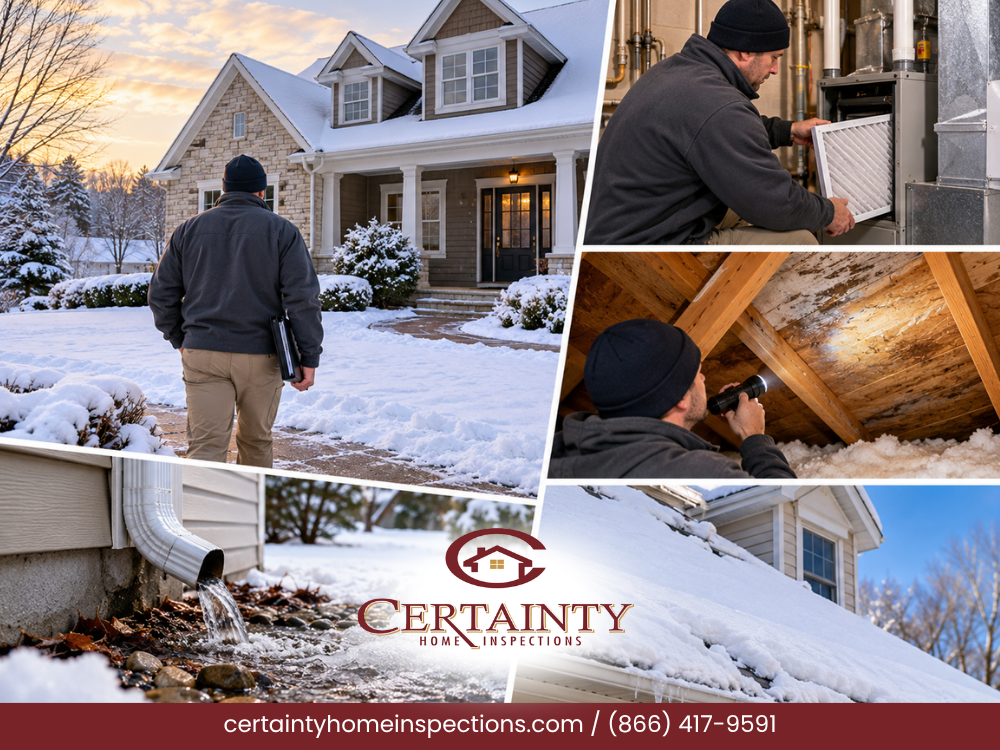
 Buying a home between Thanksgiving and the new year is a different experience. Fewer open houses, shorter days, holiday schedules on every side of the deal — and an inspection contingency clock that doesn’t stop for any of it.
If you’re under contract, or about to be, anywhere in the greater Louisville KY area or across the river in southern Indiana, here’s what to expect from home inspection services in cold weather: what a winter inspection covers, what it actually sees better than a summer one, what it can’t see, and how to keep the holidays from squeezing your timeline.
Can You Get A Home Inspection In Winter In The Louisville KY Area?
Yes. Home inspections happen year-round, and a winter inspection covers the same systems as one in June.
Winter doesn’t change what an inspector is looking at. It changes the conditions. Cold weather puts real load on the heating system, shows where a house loses heat and collects moisture, and sometimes limits access to parts of the property. A good inspector tells you plainly which is which in the report.
What Do Home Inspection Services Cover In The Winter?
A standard home inspection in winter covers the same ground as any other time of year:
- Roof and attic — roof coverings, flashing, gutters, and the attic’s framing, insulation, and ventilation, as safely accessible.
- Structure and foundation — visible foundation walls, framing, basement or crawl space.
- Heating and cooling — the furnace or heat pump operated under normal controls.
- Plumbing — supply and drain lines, fixtures, and the water heater.
- Electrical — the service panel, visible wiring, outlets, and fixtures.
- Interior and exterior — walls, windows, doors, grading, and drainage.
You get a written report on the condition of each, in plain language, that you and your agent can act on before your contingency deadline.
 What Can A Cold-Weather Inspection See Better Than A Summer One?
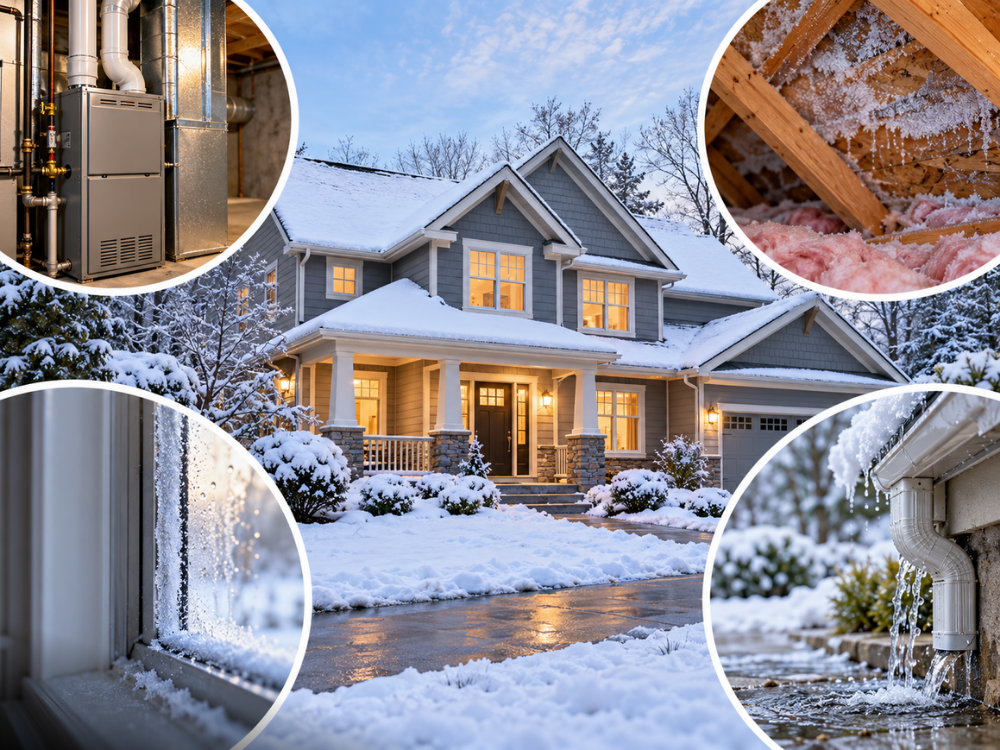 What Can A Cold-Weather Inspection See Better Than A Summer One?
More than most buyers expect.
The heating system under real demand. In July, a furnace gets a brief test run. In December, it runs the way it will all winter, and how it starts, cycles, and distributes heat through the house is easier to evaluate.
Moisture in the attic. Warm, humid air escaping from the living space can condense on cold roof sheathing. Frost on nail tips, damp insulation, or staining on the decking are winter clues to air-sealing and ventilation problems.
Drafts and heat loss. Cold air around windows, doors, and attic hatches is easier to feel when the temperature difference between inside and out is large.
Drainage in the wet season. Late-fall and winter rains show where water goes around the house — and whether it ends up in the basement or crawl space. Across the Ohio River valley, with its clay-heavy soils, that’s one of the most useful things you can learn before closing.
What Can’t A Winter Inspection See?
A few things, and it’s better to know them going in.
- The air conditioner. Most manufacturers caution against running a compressor when outdoor temperatures are low. If it’s too cold to operate the A/C safely, the inspector will note that it wasn’t tested.
- A roof under snow or ice. If the roof is covered or unsafe to access, the inspector can only report on what’s visible.
- Ground-level grading. Snow cover or frozen ground can hide how the soil slopes around the foundation.
- Winterized plumbing. In a vacant or bank-owned home, the water may be shut off and the lines drained. Plumbing that can’t be run can’t be fully evaluated.
When something can’t be tested, the report should say so clearly. That tells you and your agent where to ask the seller for more information, or where to plan a follow-up once the weather allows.
How Should Buyers Handle A Vacant Or Winterized Home?
Get the utilities on before inspection day.
If the home is vacant, ask your agent to confirm that water, gas, and electricity will be on and that any winterized plumbing will be de-winterized ahead of the inspection. Without utilities, the furnace, water heater, and plumbing can’t be operated — and those are the systems you most want tested before a winter closing.
How Do You Schedule Home Inspection Services Around The Holidays?
Book as soon as you have an accepted offer.
Thanksgiving falls on November 26 this year, and December brings its own stretch of closed offices and travel. Your inspection contingency period keeps running through all of it. Scheduling early leaves time to read the report, ask questions, bring in a specialist if something needs a closer look, and negotiate — without watching the deadline slide past during a holiday weekend.
Take the next step with confidence. Ready to schedule your inspection? Call 866-417-9591 or visit https://www.certaintyhomeinspections.com/ today!